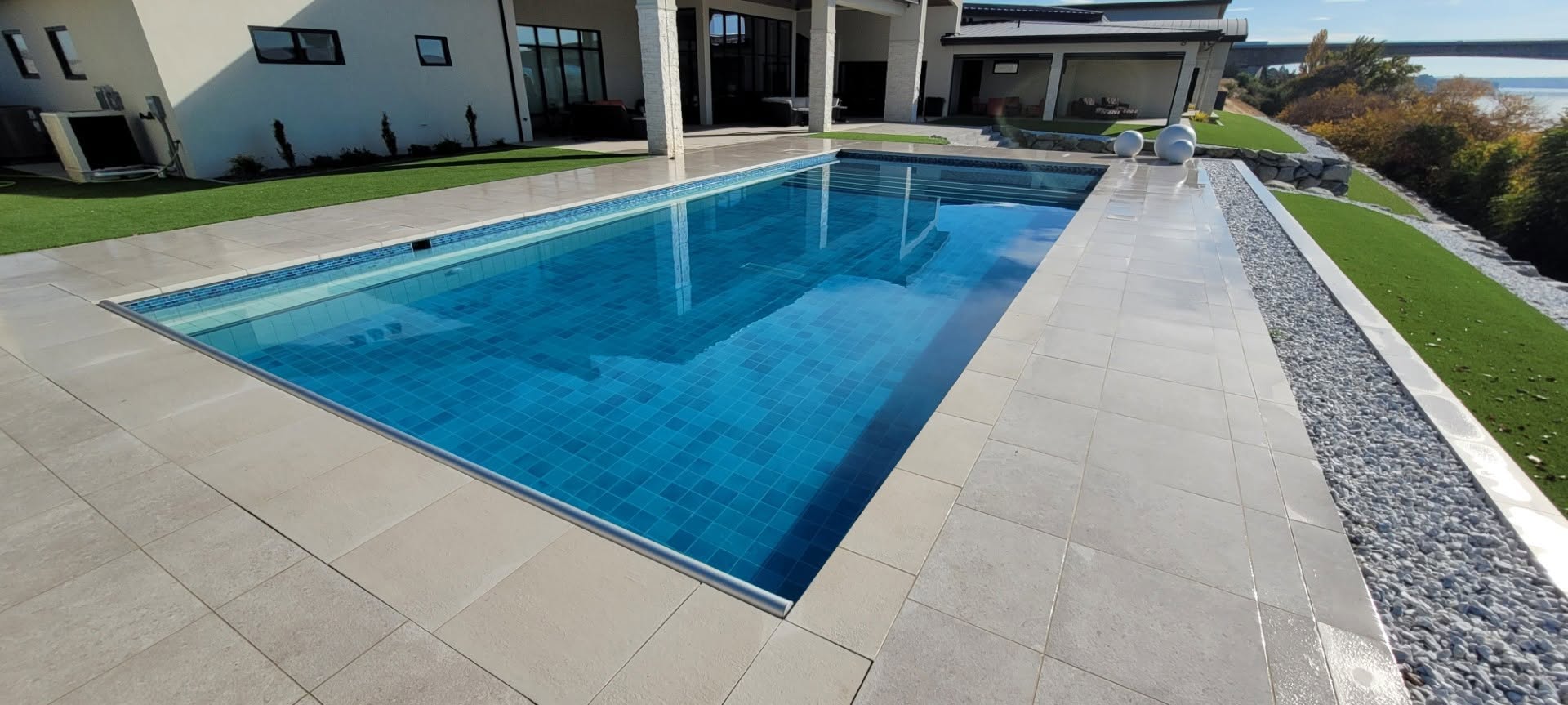
Three different objects
It is tempting to treat all-tile, plaster, and fiberglass as three finish options for the same pool. They are not. They are three fundamentally different objects, built in different ways, with different structures underneath them, and the finish is only the visible consequence of that difference.
A fiberglass pool is a manufactured shell. It is molded off-site in a factory, trucked to the property, and lowered into an excavation. The gelcoat surface and the structure are the same object, which means the finish cannot be separated from the vessel. Shape and size are limited to what the manufacturer moulds and what a truck can legally carry down a road.
A plaster pool is a concrete shell, usually shotcrete or gunite, coated on the inside with a cementitious plaster, sometimes with aggregate or pebble blended in. The structure is poured or sprayed on site, so shape is unlimited, but the interior surface is a sacrificial layer applied over it. That layer is understood by the industry to be periodically replaced.
An all-tile pool is also a concrete shell, but the interior is porcelain tile set over a waterproofed structure. The structure carries the loads, the waterproofing keeps water inside the structure, and the tile is a permanent surface rather than a consumable coating. Each of those three elements is doing a separate job, which is why the assembly outlasts the alternatives.
Structure under the surface
Structure is where most of the meaningful difference lives, and it is the part buyers are least often shown. A fiberglass shell is roughly a quarter inch thick and carries no reinforcing steel. It relies almost entirely on the backfill and the water inside it for stability, which is why improper backfill or an empty shell with a high water table can deform it. A vinyl liner pool is thinner still, often around an eighth of an inch of membrane over wall panels.
Conventional shotcrete pools are a substantial step up: typically six inches of concrete with three eighths inch rebar at twelve inches on center. That is a competent structure and it is what most of the market builds. It is also, notably, frequently built without a separate waterproofing layer, on the assumption that the concrete and plaster together will hold water.
We build heavier on purpose. Our floors and walls are ten inches thick, using 4,500 psi concrete with half inch rebar at ten inches on center each way, then waterproofed with two coats before a single tile is set. Two inch foam insulation is available where thermal performance matters. The reason is not bravado. A tile finish is only as stable as the surface it is bonded to, and a shell that flexes or cracks will telegraph that movement straight into the tile. Building a permanent finish over a marginal structure is a false economy.
Chemical resistance and water chemistry
Pool water is chemically active. Chlorine or salt, fluctuating pH, calcium hardness, and temperature swings all attack the interior surface continuously, and the surface responds according to what it is made of.
Plaster is cementitious, which means it is alkaline and porous. It reacts with the water it holds. Low pH etches it, high calcium scales it, and the surface gradually roughens, which makes it easier for stains and algae to take hold. Owners often describe a plaster pool as needing more attention over time, and that is precisely what is happening: as the surface degrades, it becomes harder to keep clean.
Fiberglass gelcoat is more chemically stable than plaster but not inert. Under sustained UV exposure and chemical load it chalks, fades, and can develop surface crazing. Once that happens, refinishing a gelcoat surface in place is a specialist job with a limited service life.
Fired porcelain is effectively inert. It is impervious to liquids and vapors, resistant to chemical corrosion, and unaffected by fading, staining, or discoloration. The water cannot degrade it because there is nothing in it for the water to attack. Practically, this means the surface you fill the pool with is the surface you have in year thirty.
Maintenance over a decade
Routine maintenance across the three is more similar than different. Every pool needs balanced water, filtration, circulation, and periodic cleaning. Where they separate is in what the surface demands and what happens when the surface reaches the end of its life.
A plaster interior asks for careful chemistry, partly for water quality and partly to protect the plaster itself. Brushing matters more. Staining and etching are common and often permanent. Fiberglass is easier on day-to-day chemistry and its smooth surface resists algae well, though gelcoat is sensitive to metal staining and to water lines developing where the surface has chalked.
A porcelain tile interior is cleaned rather than protected. Because the surface is non-porous, deposits sit on top of it instead of bonding into it, and grout lines are the only element that asks for routine attention. There is no sacrificial layer to preserve, so water chemistry can be managed for swimmer comfort and equipment life rather than for the survival of the finish.
Lifespan, and what replacement actually means
The lifespan numbers are well established in the industry. A plaster interior generally serves seven to fifteen years before it needs to be resurfaced. Fiberglass gelcoat typically holds ten to fifteen years before refinishing becomes a conversation. A vinyl liner runs eight to twelve. A properly built porcelain all-tile pool can last fifty years or more.
Resurfacing is not a cosmetic touch-up. A plaster pool must be drained, the old surface removed, the shell prepared, and a new interior applied and cured, which takes the pool out of service and disturbs the tile line, fittings, and often the coping. Doing that three or four times across the life of a house is the normal expectation for a plaster pool.
This is the real argument for tile, and it is a durability argument rather than any other kind. The all-tile pool is designed to never need that cycle. It is why we describe our work as built for generations, and why the structural decisions underneath the tile matter as much as the tile itself.
Choosing deliberately
Fiberglass has genuine advantages: speed of installation and a predictable product. Plaster offers unlimited shape at a construction standard the whole market understands. Both are legitimate choices made by many owners.
What we would ask any owner to do is make the decision with the full timeline in view rather than only the construction schedule. A pool is one of the most permanent things added to a property. The question worth asking is not only how it will look the week it is filled, but what condition it will be in when the house changes hands.
If that reasoning matters to you, the all-tile approach is built around it. Walk through the portfolio to see how the finish holds up across builds that are now well over a decade old, and read the tile pools page for the construction detail behind them.